
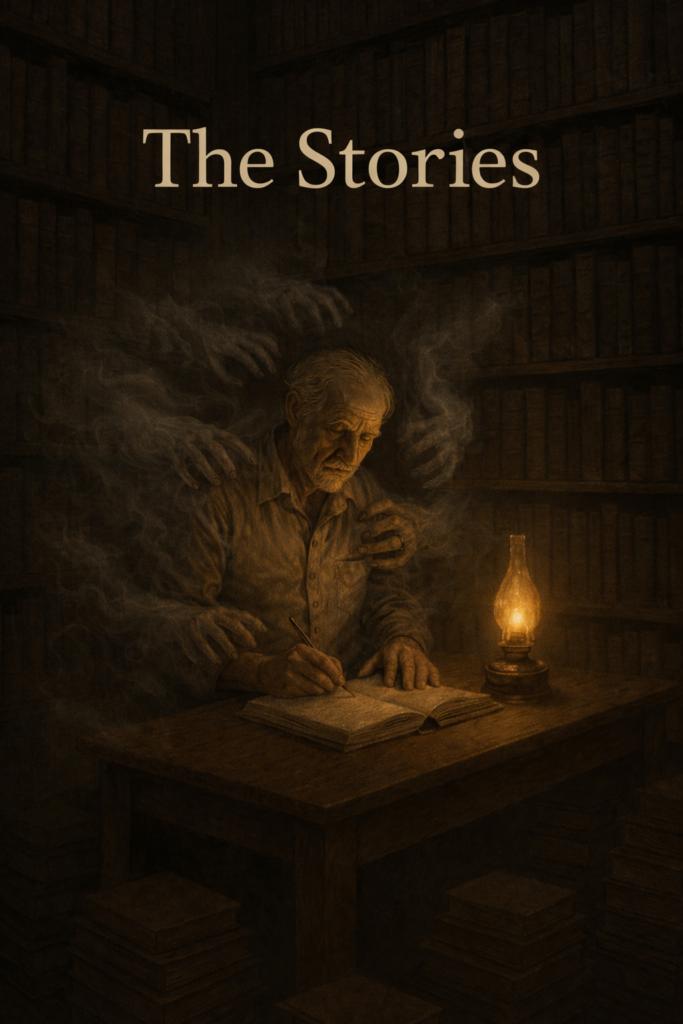
Arjun wrote ghost stories but never believed in ghosts. To him, they were tricks of the mind, nothing more.
One season, his words stopped. He stared at blank pages for weeks.
It was a joke. But Arjun was desperate.
At the edge of the city stood an old abandoned house. Its windows were broken, its walls eaten by vines.
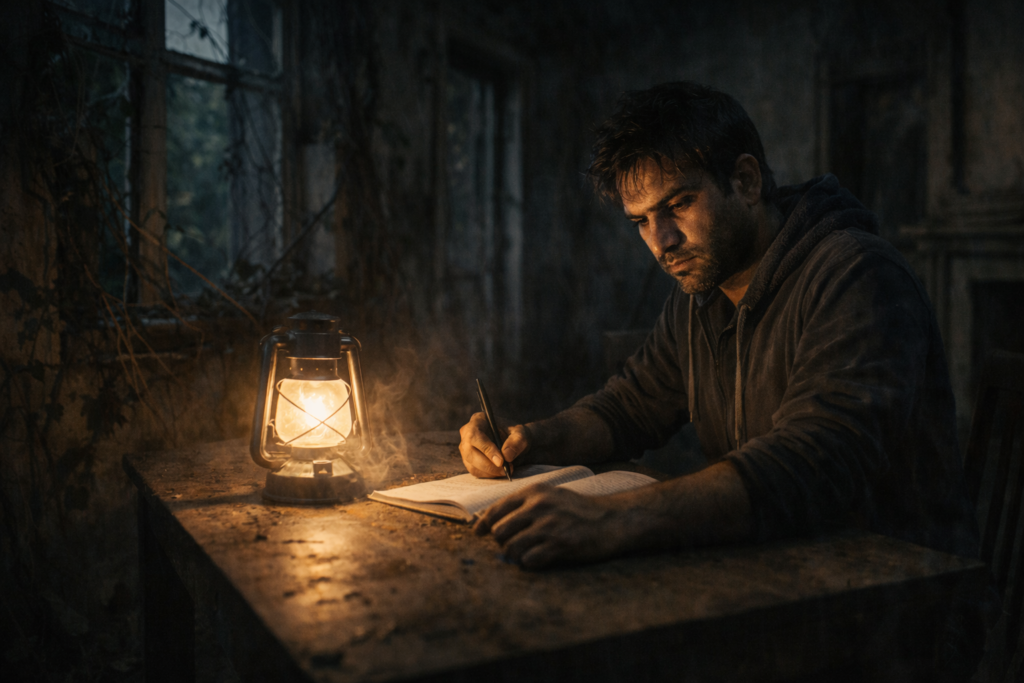
Arjun carried a battery lamp and a notebook, sat at a cracked table, and began to write.
So he returned. Again and again.
Each visit, the whispers waited for him. Each time, the words poured out.
He grew famous, wealthy, praised.
One winter night, the whispers grew louder.
They no longer guided; they commanded.
He hesitated. Then, with the lamp shaking in his hand, he opened the door.

Inside was a library. Shelves to the ceiling, heavy with books. Dust lay on them like snow.
He pulled one out. His name was on the cover.
Then another. And another.
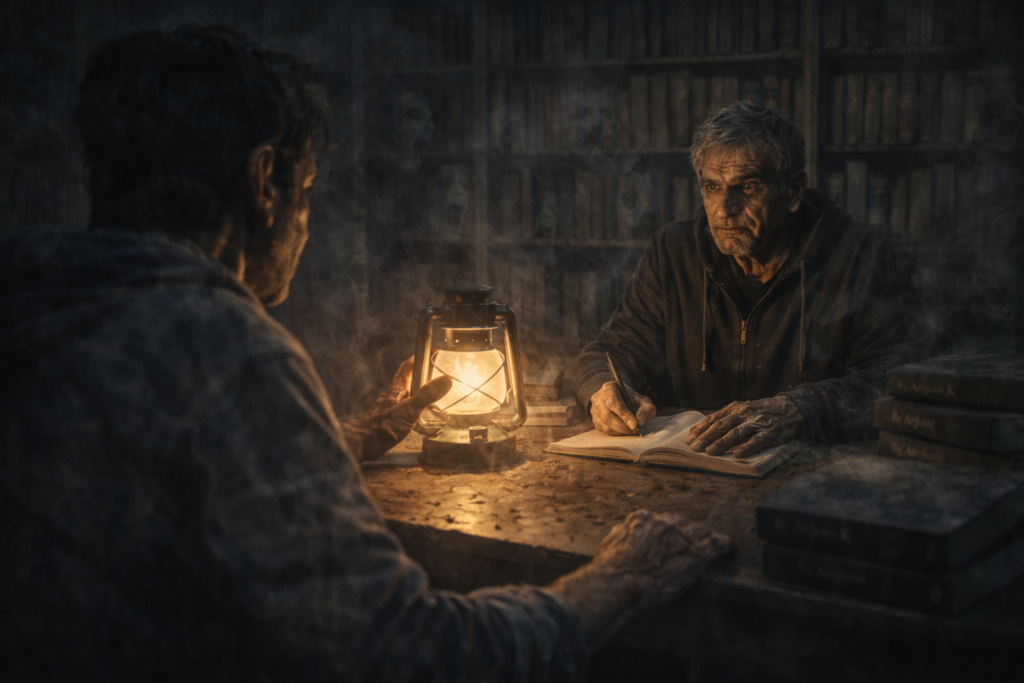
In the center sat an old man at a desk. Bent, grey, his face lined deep.
The old man looked up.
He looked down at his hands. They were wrinkled, trembling. His youth was gone.
The books around him stood unopened, unread.
His struggle, his words, all for nothing but the silence of this house.
The door behind him was gone. Only the shelves remained. Only the whispers.
Arjun sat at the desk. His hand began to move.
Another story filled the page. The house listened.

Stories like this are not meant to end neatly.
They linger — in pauses, in silences, in thoughts you don’t immediately understand.
If this moment stayed with you, it’s because it belongs to a larger world —
one where reality bends quietly and meaning reveals itself slowly.
Or listen. Or return later. Some stories wait for the right moment.
 Be the first to rate this story
 Loading...