
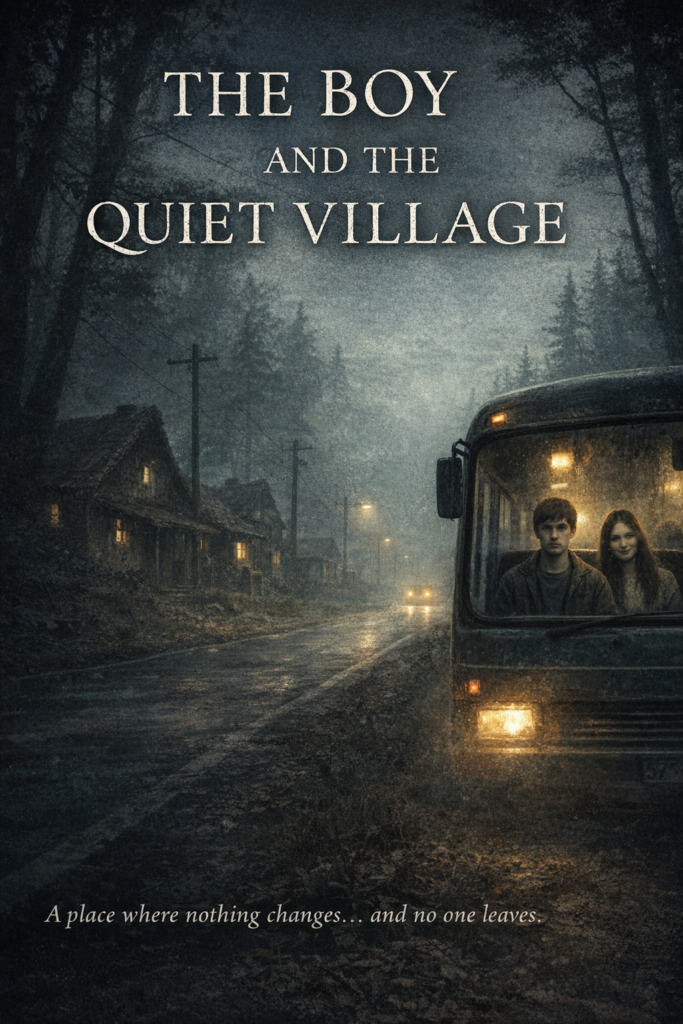
There was once a boy who lived in a small, quiet village inside a thick forest.
The houses were old, the roads were empty, and the air always felt still.
He lived mostly alone, though a few people stayed in nearby huts and spoke to him gently.
They often told him:
“You should get married. You should not live alone.”
He only smiled and continued with his simple life.
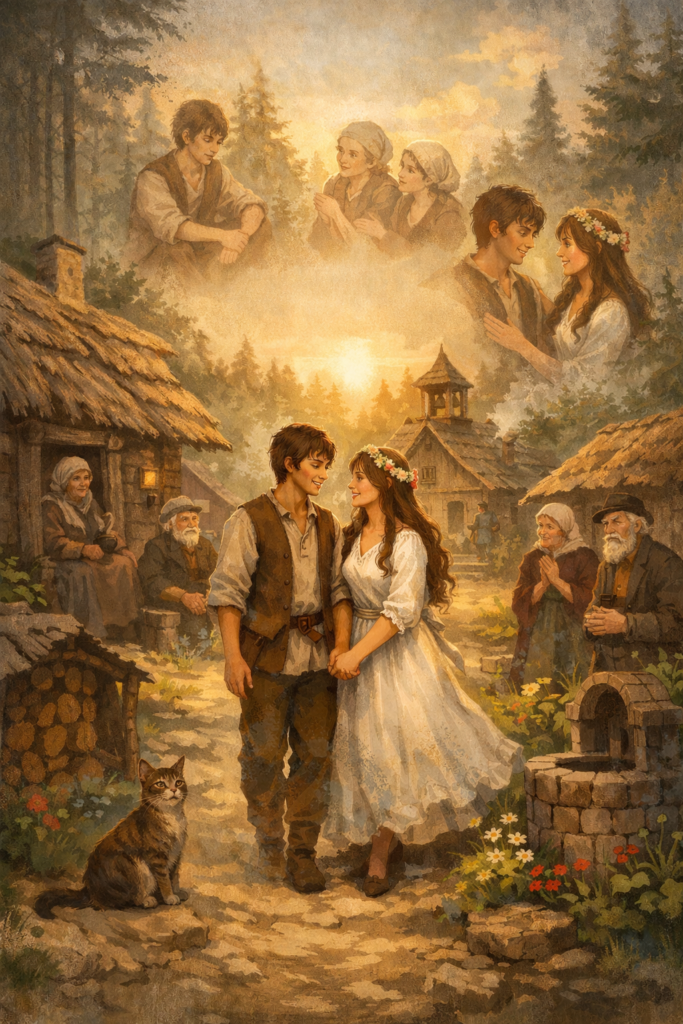
One day, a girl walked into the village.
She smiled at him in a way that made his heart feel lighter.
They talked every day, and soon he felt close to her.
Before long, he decided to marry her.
The villagers looked surprised but did not question anything.
For a while, the boy felt truly happy.
But nights in the village were different.
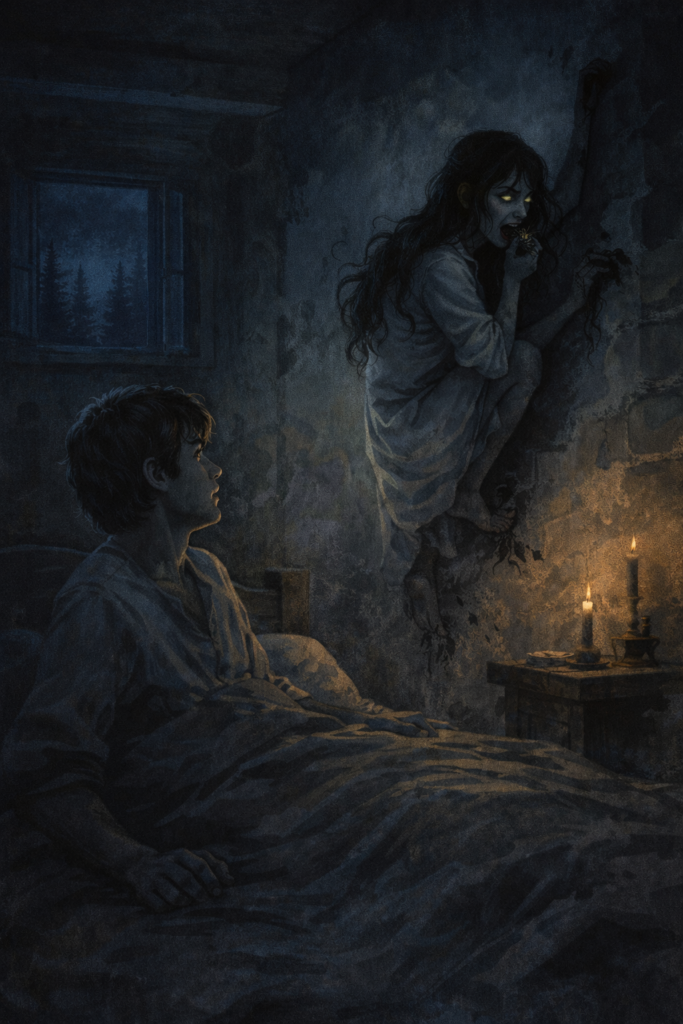
One night, he woke up to a strange sound —
in the darkness.
He looked around.
His wife was not in bed.
When he turned toward the wall,
his heart tightened.
She was climbing the wall in silence,
moving like a shadow,
eating insects slowly one by one.
Her hair hung down, her eyes glowed faintly.
When she noticed him watching, she whispered,
“Don’t shout. Go back to sleep.”
He said nothing.
And in the morning,
she behaved as if nothing strange had happened.
He tried to ignore it.
But every night, something unusual happened again —
shadows moved on their own,
voices whispered softly,
and his wife shifted in ways no human should move.
Still, the boy stayed silent.
One early morning, unable to bear the strange nights anymore, he packed his small bag quietly.
The village was still asleep.
He walked to the bus stop alone, his heart beating fast, his mind full of mixed thoughts.
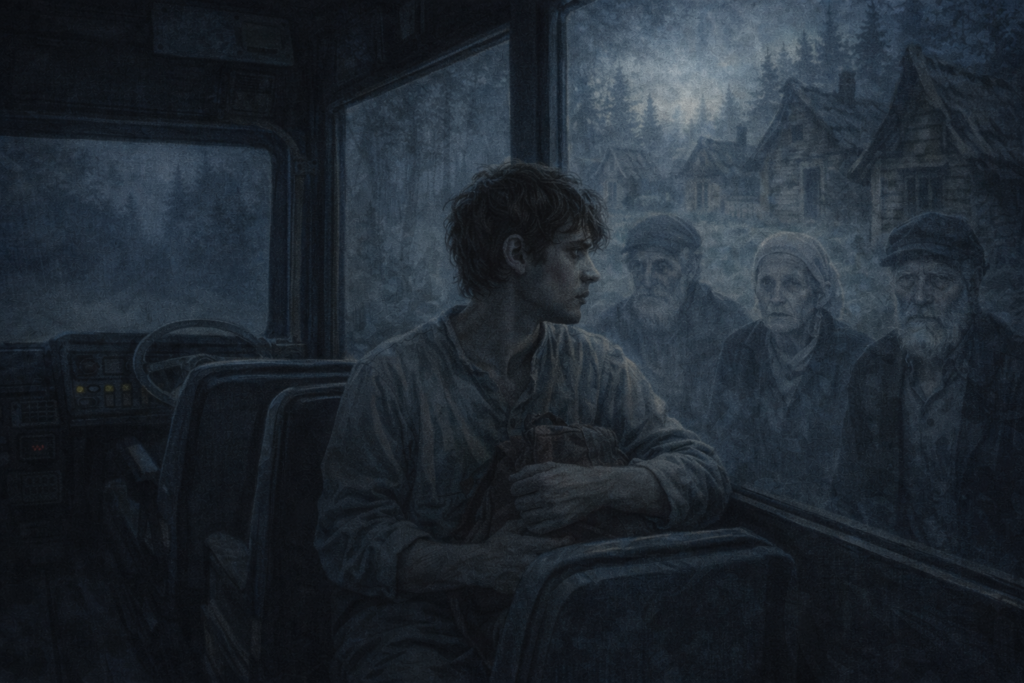
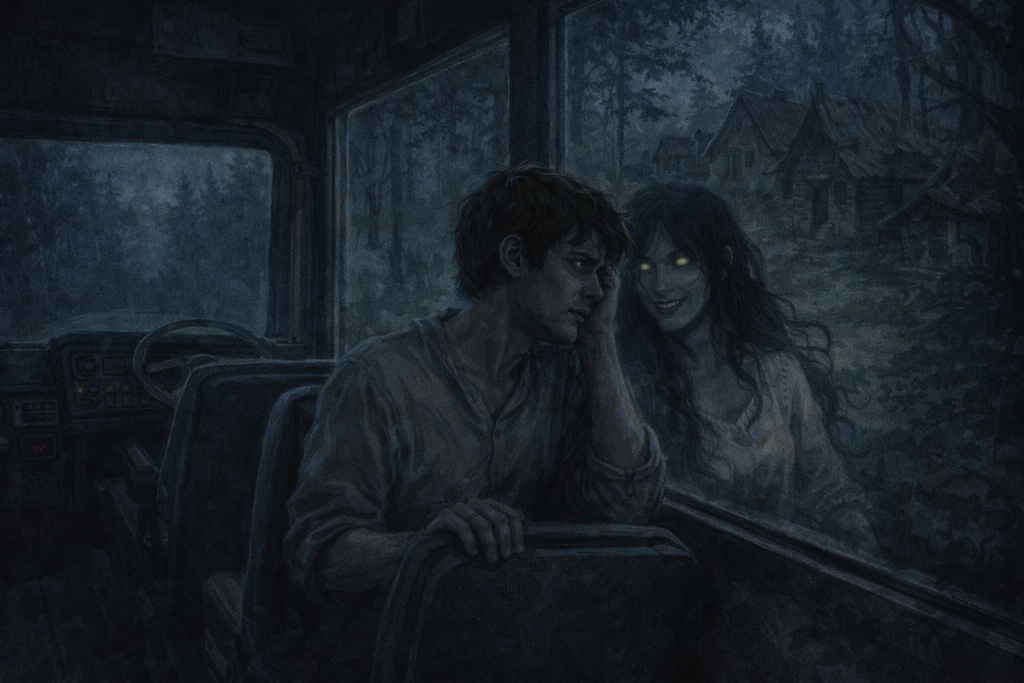
When the bus arrived, he sat near the window and hoped he could leave this strange place behind.
But as the bus started moving, he noticed something odd.
The huts he passed every day did not look the same.
Some seemed older than he remembered, some looked faded, some looked like they were falling apart — as if no one had lived in them for years.
He blinked.
Faces he passed every morning looked pale through the bus window, almost like shadows of themselves.
And then,
as the bus rolled past the last hut,
a quiet voice came from beside him.
“Where are you going?”
He turned his head slowly.
His wife was sitting next to him, smiling gently,
as if she had been there the whole time.
In that one moment,
everything inside the boy shifted.
He understood something
that he had never allowed himself to see:
nothing in that village had ever changed.
no one had ever aged.
no one had ever come from outside.
no one had ever left.
And now,
as he looked at his wife’s calm smile,
and the village blurring behind the bus like a fading picture…
he finally knew why.
No one knows what the boy chose after that.
Whether he stayed.
Whether he returned.
Whether he vanished with the village.
Psychological fiction has long been discussed as a literary form that examines perception and identity, often overlapping with philosophical storytelling.
Readers interested in broader literary perspectives can explore literary theory archives or curated discussions on narrative psychology, where consciousness, memory, and meaning are examined beyond plot and genre.
For more stories like this — read slowly, or listen as audio.
Begin here
 Be the first to rate this story
 Loading...