
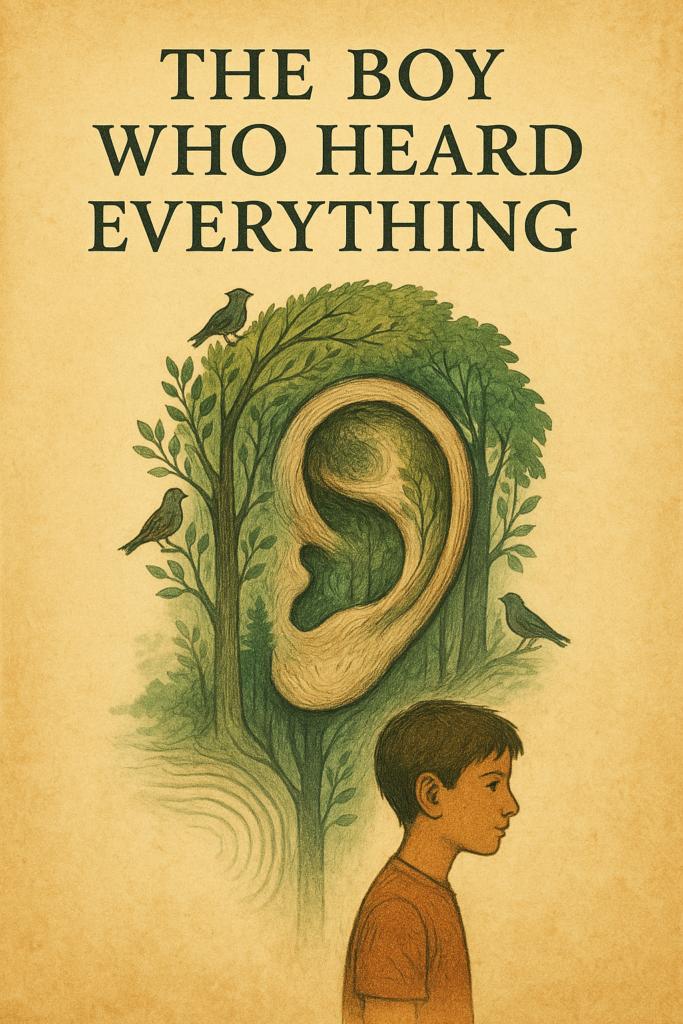
The Boy Who Heard Everything
A quiet story
Aarav was different from the others.
Not in the way that made him proud — but in the way that made the world feel heavier than it should.
When he was small, he liked to talk — to toys, to walls, to the wind.
Most children do.
But the strange thing was —
they talked back.
The first time it happened, he was five.
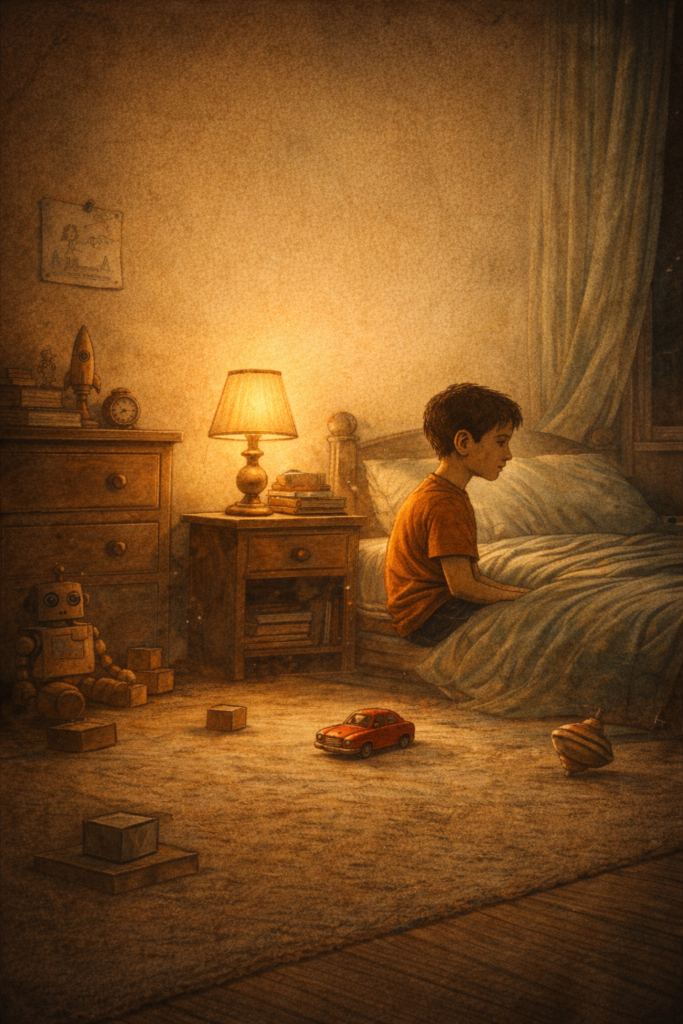
He dropped his red toy car on the floor and heard a faint sound, like a sigh.
“Did it hurt?” he asked softly.
A pause. Then, almost shyly, the car said,
“A little. You play rough sometimes.”
He froze. He looked around.
Nobody else heard it.
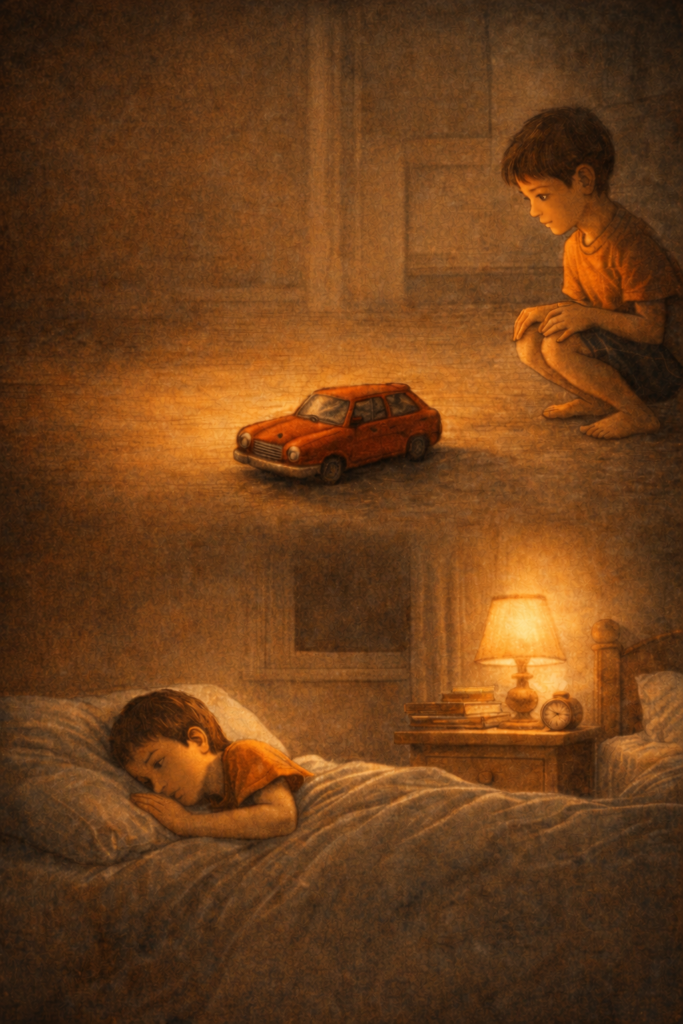
That night, he tried again — this time with his pillow.
“Do you like when I sleep on you?” he whispered.
The pillow replied,
“It’s warm. But sometimes… you cry in your sleep.
I wish I could help.”
By the time Aarav was ten, everything spoke.
The walls moaned when it rained.
The clock begged to rest.
The light bulb said it was tired of pretending to shine bright.
At first, he loved it.
He thought he had friends — thousands of them.
He’d greet the table, thank the door, apologize to his pencil.
He’d whisper “sorry” when he tore paper.
He believed the world was alive — and that was beautiful.
But beauty, he would learn, has a price.
When he turned twelve, the voices began to grow louder.
Everywhere he went, everything spoke — at once.
The chair he sat on groaned under him.
The floor complained about footprints.
The water in the tap screamed when it was turned.
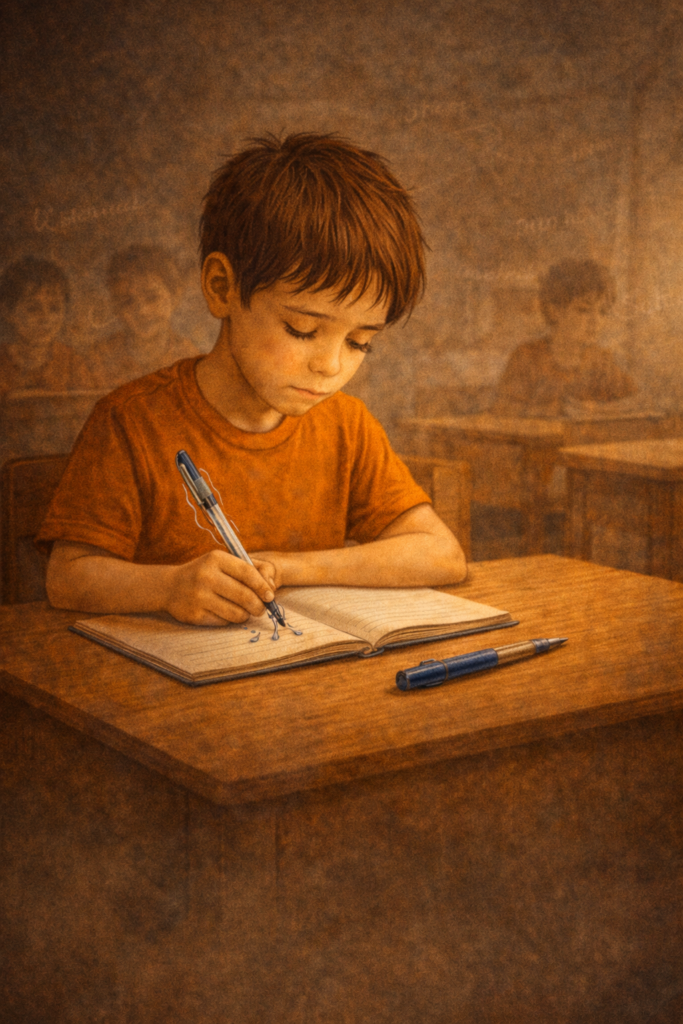
At school, he stopped writing because his pen cried.
He stopped eating because the bread whispered, “I wanted to stay whole.”
He stopped sleeping because even his bed whispered, “You’re heavy tonight.”
He started walking barefoot —
because shoes complained of pain.
He spoke less —
because even words, he thought, might get tired of being spoken.
His parents worried.
Doctors said he was hallucinating.
But he wasn’t sick —
he was simply listening too much.

One night, after dinner, he sat in his room — surrounded by his things.
The desk creaked.
The curtains sighed.
Even the books whispered,
“We want to rest.”
He stood in the middle of the room, shaking.
“Why are you all suffering?” he cried.
“Why can’t you just be quiet?”
That night, the rain had stopped.
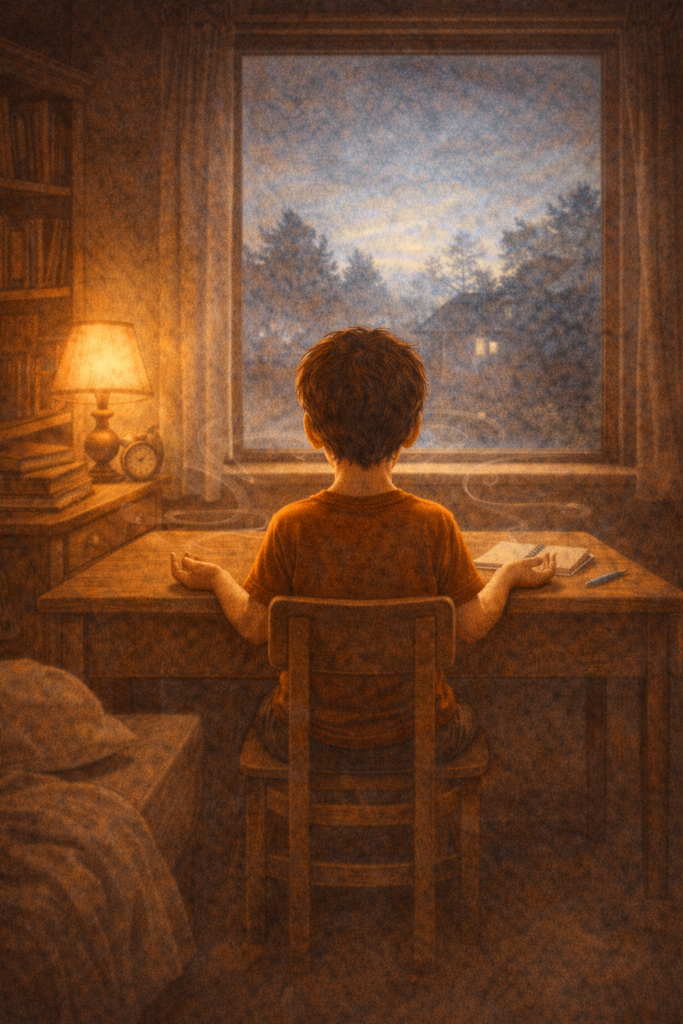
The world outside Aarav’s window looked washed and weightless.
He sat at his desk,
his palms open,
his breath steady.
For days he had listened — to everything.
He didn’t hear words anymore,
only a soft hum
that came from everywhere
and nowhere.

He thought of his science lessons —
atoms, energy, vibration.
He thought of the trees that whispered
even when there was no wind.
Maybe, he wrote once in his notebook,
everything is speaking the same language,
just at a different pitch.
He smiled faintly.
It all made sense now —
the noise,
the voices,
the ache of being too aware.
It was never madness.
It was connection.
He took out a page and began to write —
slowly, carefully,
as if not to disturb the air:
“I’ve found the quiet inside the sound.”
He took out a fresh page and wrote carefully,
as if not to disturb even the air around him:
“Everything is vibration.
And I belong to nature.”
He folded the note and placed it on the table.
Then he looked around the room —
at the walls,
the books,
the dim lamp.
For the first time, they felt quiet.
Not silent —
just peaceful.
Before dawn, Aarav stepped out of the house barefoot.
The earth hummed beneath his feet
like an old friend welcoming him home.
He walked into the morning mist,
into the trees,
into the only place that had ever spoken to him softly.
He did not disappear.
He simply went where he finally felt understood.


Some stories don’t speak loudly. They wait — for readers who know how to listen.
Click here for more Be the first to rate this story
 Loading...